




Skip to content
Strategic Design

Where the contact center stack becomes a system

Most contact center stacks depend on integration to perform. We help you design the strategy behind yours.

Your integration layer has vital strategy implications

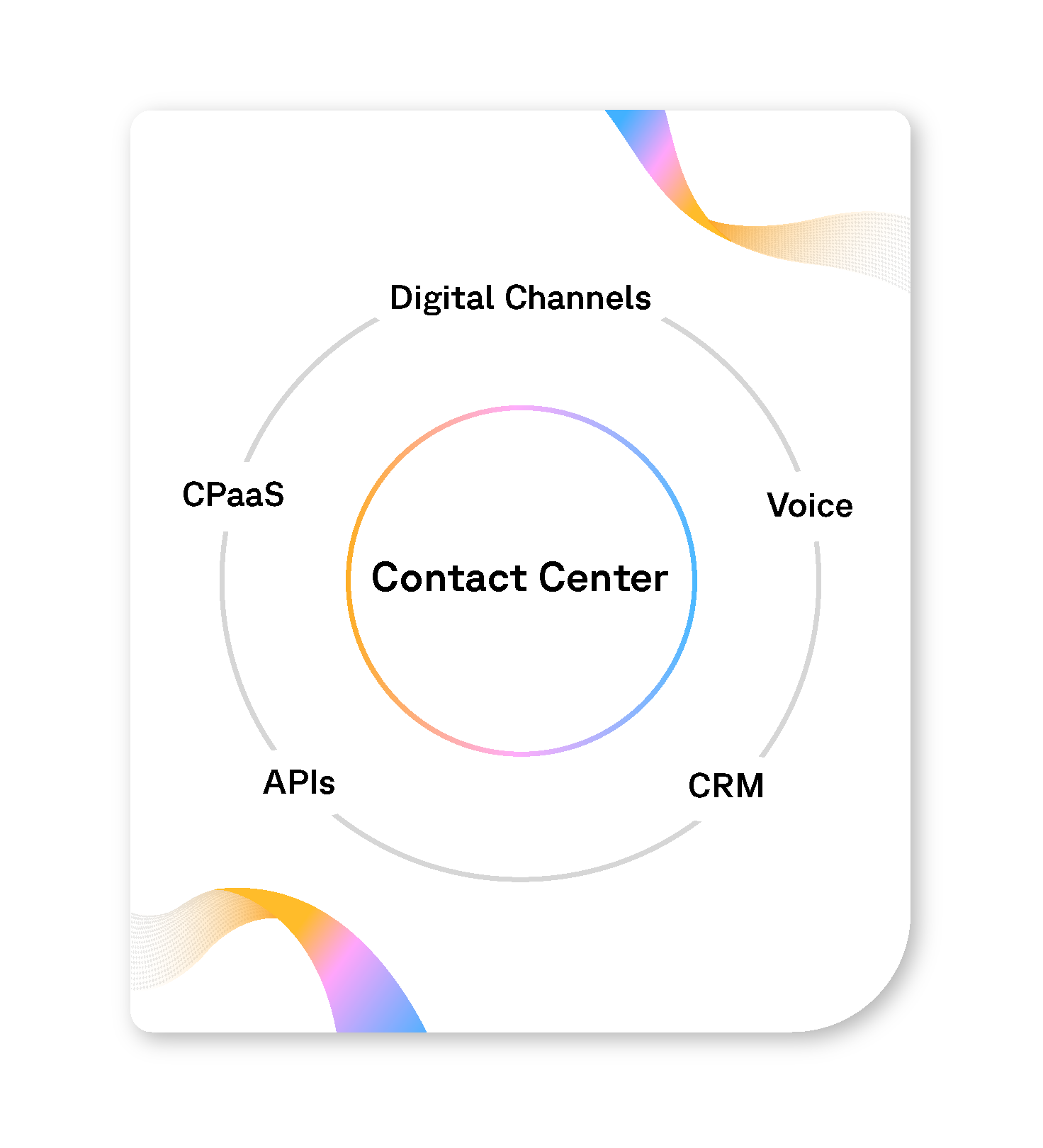
Your CCaaS, UCaaS, CPaaS, CRM, and AI investments only deliver if the integration layer between them is designed deliberately. That layer influences performance across the contact center. Three places that influence shows up most:

Data that flows cleanly between systems, with clear ownership and no rekeying

Routing that reflects what the customer is trying to do, not which channel they happened to land in

Architecture that survives platform updates without quarterly rework

Where the critical design work happens

Design one without the other, and the other will design itself.

#01

Architecture underneath

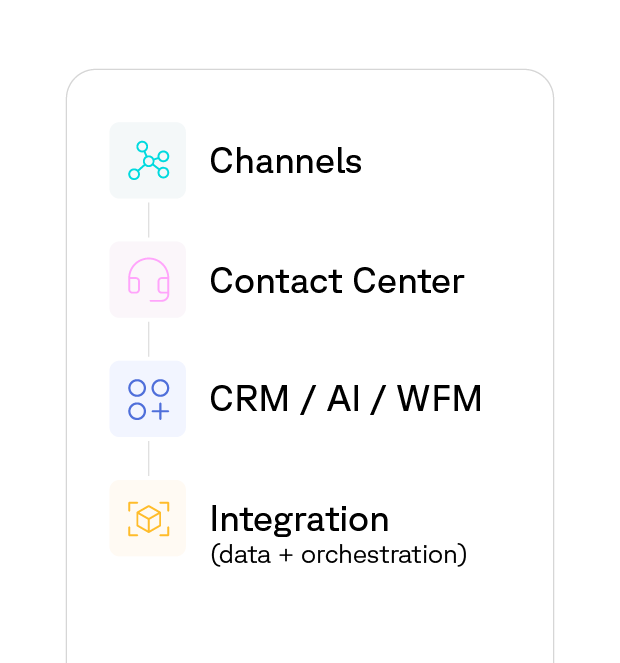
This is the integration layer itself: the platforms in the stack, the data moving between them, and the orchestration that ties it all together. Architecture choices decide whether the stack scales, how AI can be added, and how much of your engineering capacity goes into maintenance versus new capability.

#02

Workflows on top

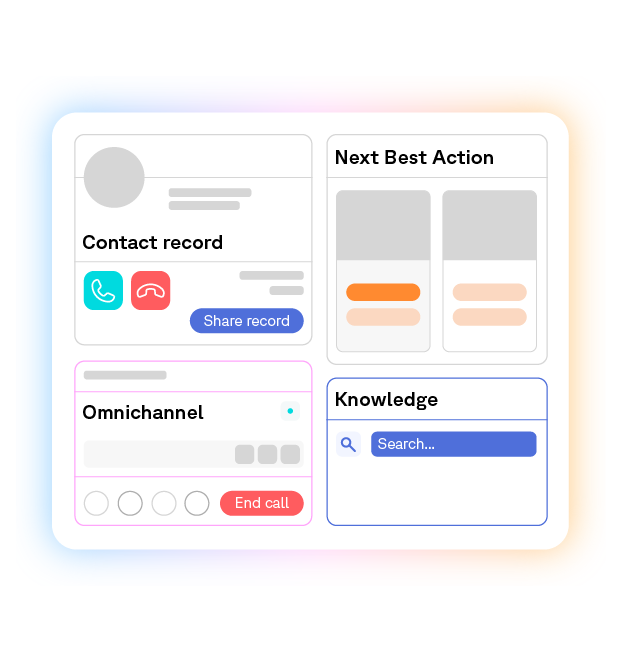
This is how the architecture shows up to the people using it. The agent who needs customer context. The supervisor trying to make sense of an interaction that crossed three channels. The customer who started in chat and ended up on the phone. Workflow integration is where the cost of weak integration shows up first.

How our team guides your integration strategy

Integration design is less about platforms, more about the workflows your operation needs to deliver. We work with your team to articulate what the agent, supervisor, and customer experience should look like. From there, we trace backward into the routing, data, and orchestration the workflows actually depend on. This is how we decide what gets integrated, in what order, and at what depth.

Not every connection needs the same level of integration. Some workflows depend on real-time, deterministic links: in-call AI assistance, screen-pop, contextual case routing. Others are better served by loose coupling that tolerates platform updates and roadmap changes without rework. We help you decide which is which so every connection is doing the job it's meant to do.

Salesforce updates its APIs on its own cadence, while Cisco's contact center capabilities keep developing. AI vendors are moving the fastest of all. An integration layer that breaks on every release stops being infrastructure and becomes a maintenance burden with compounding cost. We design integrations using patterns that decouple where they should, document dependencies, and isolate the places where change can be best absorbed.

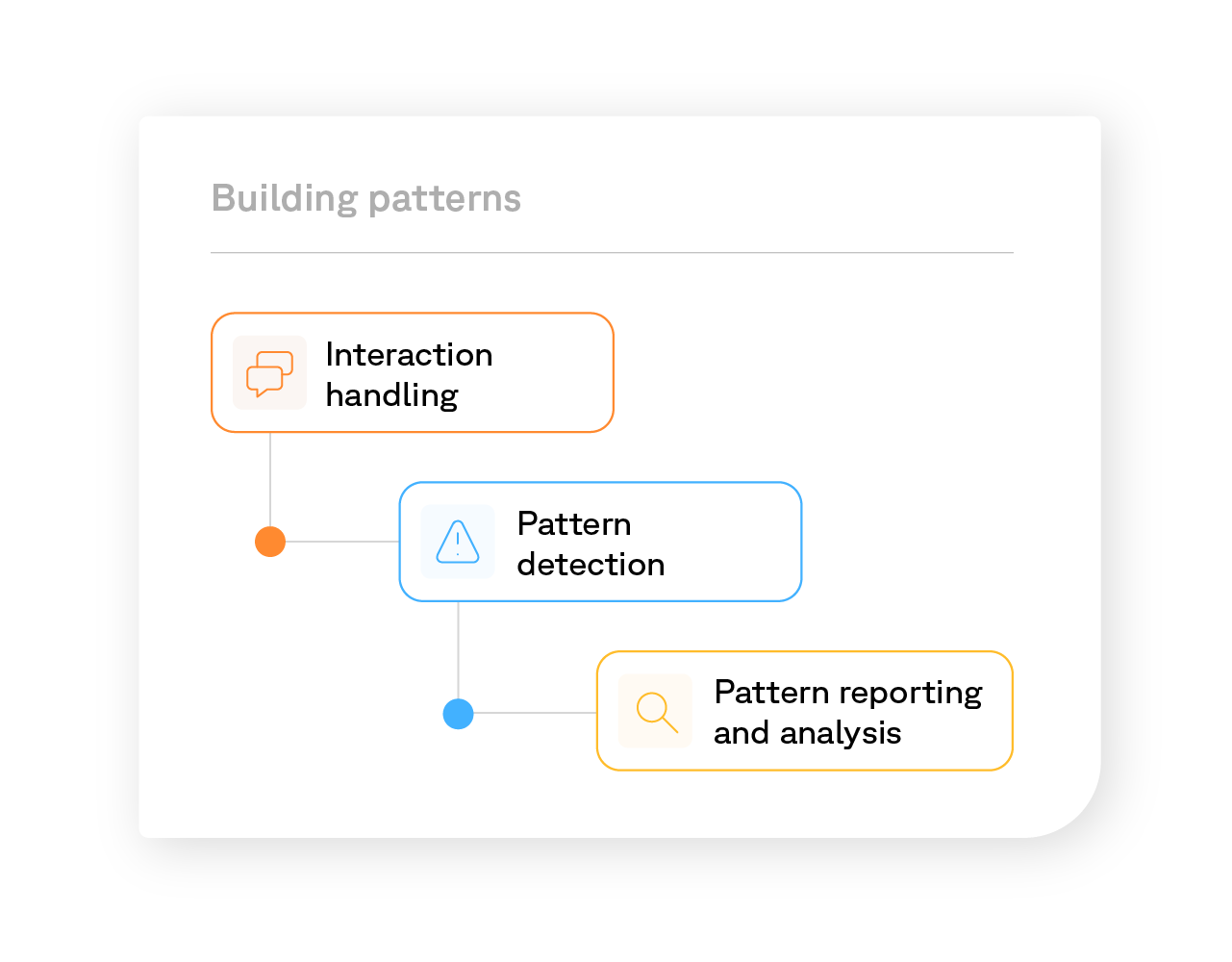
The hidden cost of fragmented integration work is solving the same problem repeatedly. Each new platform raises the same questions about agent context, data flow, and reporting consistency. The answers tend to get re-engineered every time. Reusable integration patterns and a clear middleware strategy reduce that tax materially over time, and get the operation to a place where new capabilities plug into an existing foundation.

Case Study

Daktronics

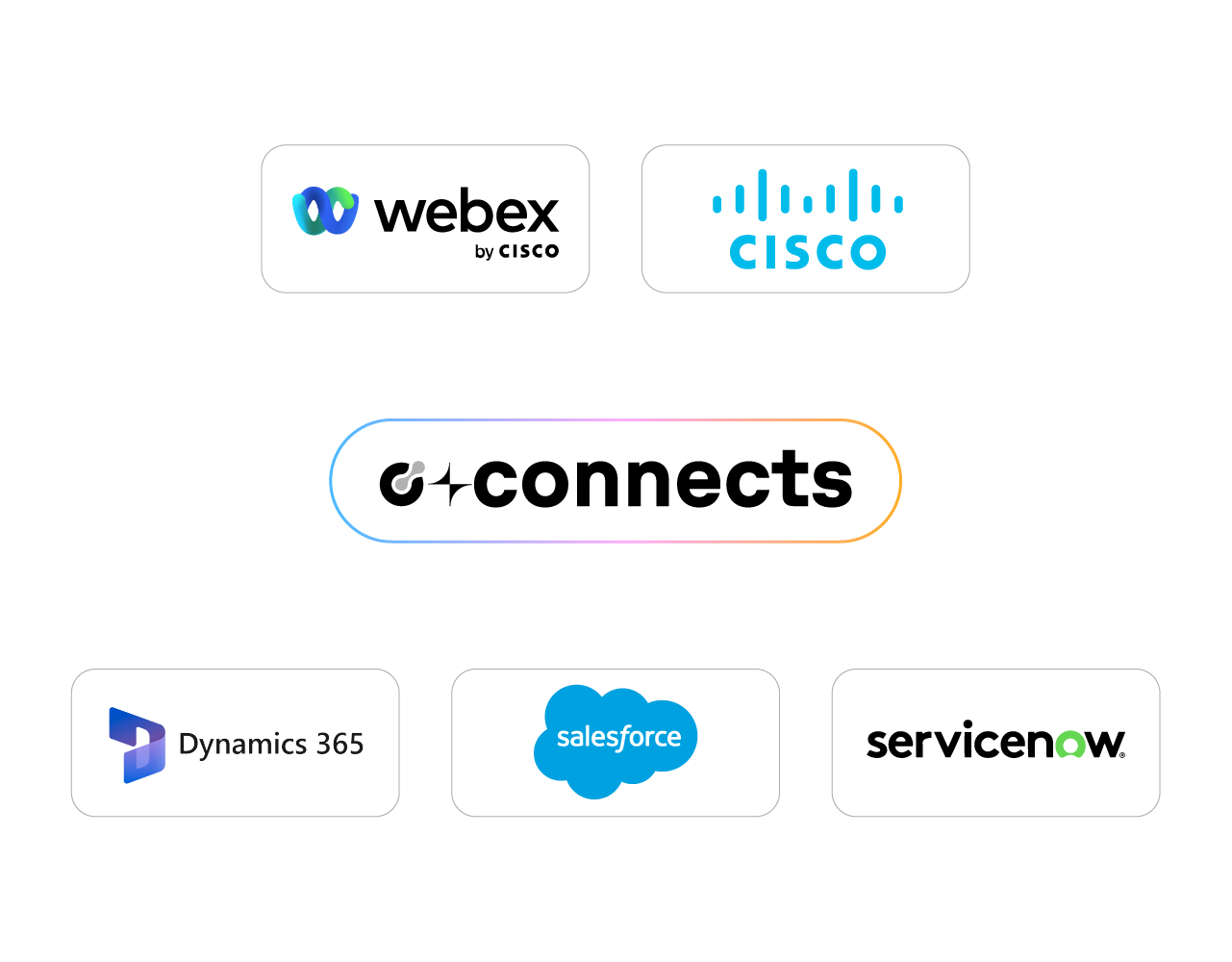
Daktronics built integration depth between its Cisco contact center and Salesforce using b+s Connects. The result was a system where intelligent routing flows and contextual customer data reached agents at the moments that mattered, removing manual lookup work and improving the experience on both sides of the call. The integration was designed as a foundation that the operation continues to build on, rather than a one-time engineering project.

Testimonials wave

What happens next

Integration strategy connects to almost every other piece of strategic work happening in a contact center. Some organizations come to us with integration in front of platform or AI decisions, especially when they're navigating CRM transitions or planning a meaningful AI rollout. Others ask us to layer integration thinking onto evaluation, performance, or AI work that's already underway. Both paths are common, and the right order depends on where your environment is today.

Start with a conversation

If integration is on the agenda for your contact center, the most useful first step is a structured conversation. We’ll cover what's connected today, what isn't, and where the strategy work needs to start.

This site is registered on wpml.org as a development site. Switch to a production site key to remove this banner.