



Start where AI adds value
We focus on the tasks AI is well suited to, especially repeatable, high-volume interactions where speed and consistency matter.
Conversational AI needs care. We help organizations apply AI across voice and digital channels thoughtfully, supporting self-service and agents while keeping the wider system joined up.
Trusted by leading organizations.





Bucher + Suter helps organizations introduce AI in ways that support service quality, protect brand experience and keep the wider operation joined up. We believe:
Adding AI is one thing. Making it work well across channels, connected to the wider platform environment, and safe to scale is something else. Our role is to make sure AI supports customer journeys and agent workflows as part of the whole system.
We focus on the tasks AI is well suited to, especially repeatable, high-volume interactions where speed and consistency matter.

Poor self-service creates frustration quickly. We design AI experiences that are structured, purposeful, and able to hand over smoothly when needed.

AI should support service, not take ownership away from your business. We design clear escalation paths so your people stay involved where judgment matters.
We help organizations introduce AI so it can evolve over time, meaning future improvements don’t mean starting again from scratch.
Conversational AI only works properly when it’s connected to routing, CRM, knowledge, and reporting. We make sure it fits the wider architecture cleanly.

AI can play a role across chat, messaging, and voice. We apply it where it improves access and efficiency without fragmenting the experience.

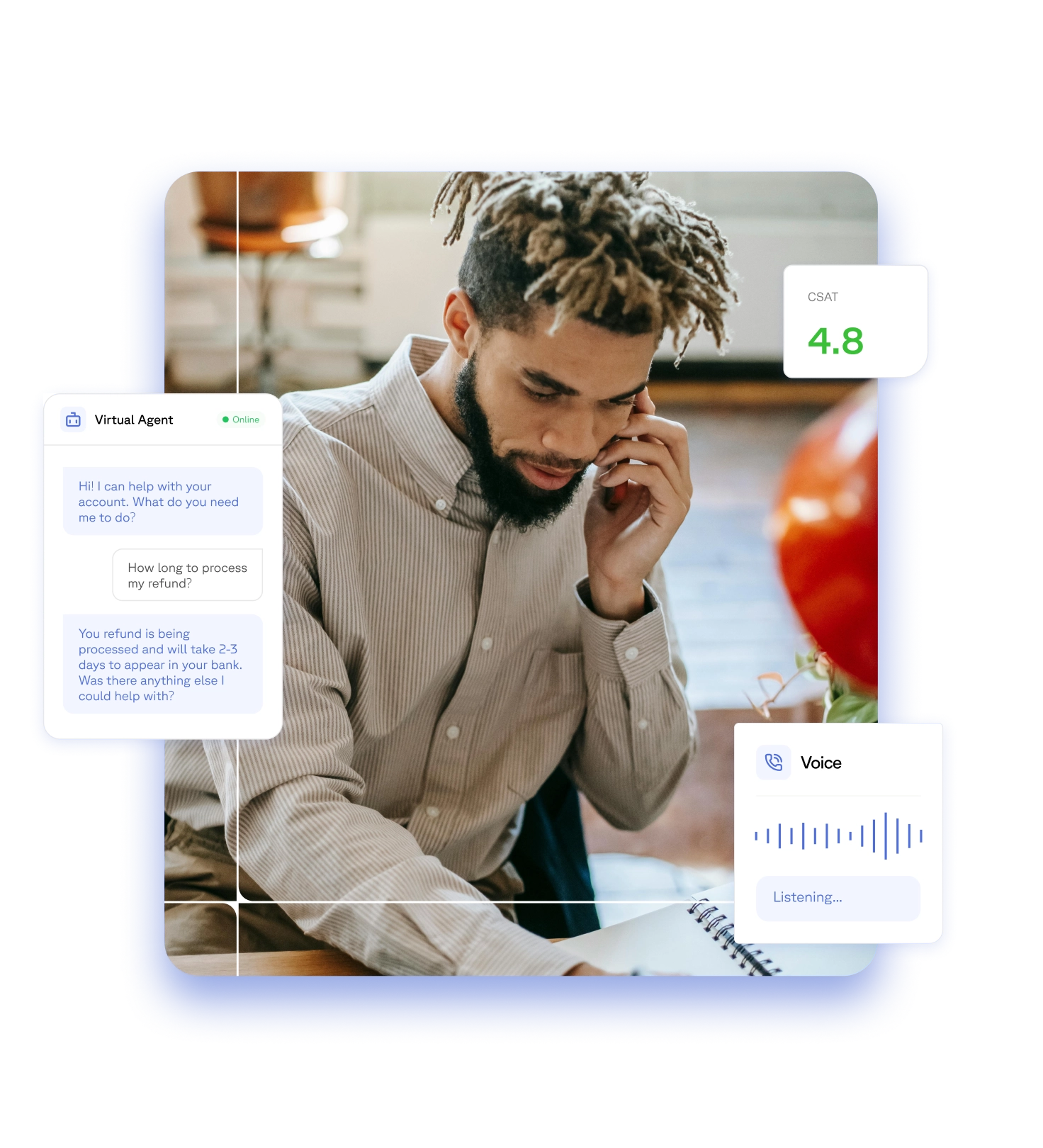
We introduced chatbots as part of a broader, cross-channel AI ecosystem to support customer self-service while keeping escalation paths, control, and service consistency in place.

We helped an enterprise contact center use chat alongside voice and messaging channels, with AI-supported interactions helping scale digital engagement, all while preserving service quality.
There’s often pressure to “do AI” quickly. Many organizations are still working out where AI can genuinely improve their workflows. The challenge is applying it in ways that improve service and assist agents without damaging trust, creating brittle experiences or adding operational risk. We help you move at the right pace, with clearer priorities and better control.
Conversational AI can reduce pressure on teams by handling simple, repeatable requests across voice and digital channels. Verification, account updates, password resets and basic knowledge tasks are often good starting points. The goal isn’t to automate everything. It’s to use AI where it genuinely improves performance.

Complex, emotional or high-stakes conversations still need human judgement. We help organizations design AI around that reality, so customers can move smoothly to the right person when the conversation needs more care.
AI helps when it is applied in the right places and connected properly to the wider system. We focus on use cases that improve speed, access, and efficiency, while keeping escalation paths clear when a person needs to step in.
It often works best in simple, repeatable interactions across chat, messaging, and selected voice journeys. The key is being clear about where automation adds value and where it should hand over.
We design AI with clear boundaries, escalation paths, and oversight in place. That keeps people involved where judgment, empathy, or risk need a more careful response.
AI works best when routing, knowledge, CRM, and channel architecture are already thought through. We help organizations understand what needs to be in place first, so AI is built on something stable.
The answer isn’t to automate too much, too quickly. We focus on clear use cases, better handover design, and AI journeys that are useful in practice, not just impressive in a demo.
We design conversational AI as part of the wider contact center model, so new capabilities can build on what is already there. That makes it easier to improve, expand, and adapt over time.


